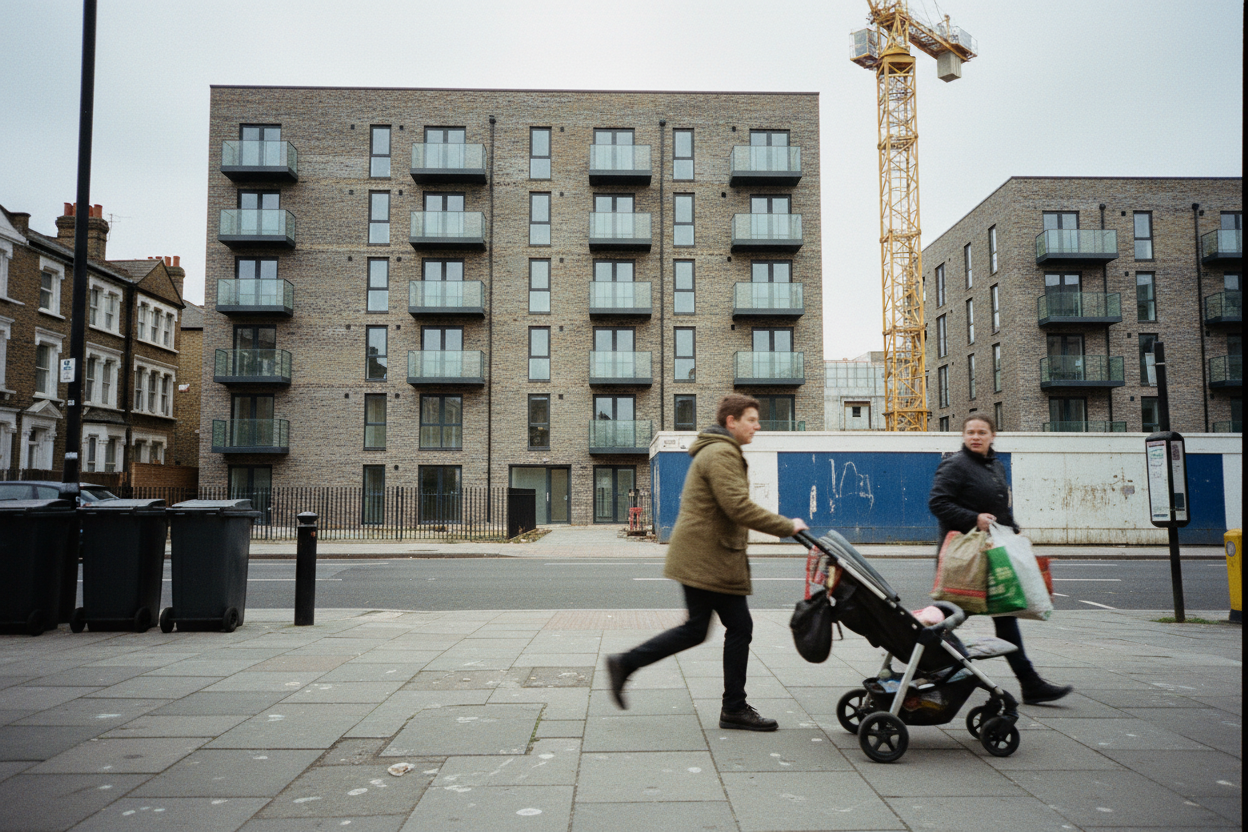
London is producing large numbers of one and two-bedroom flats while falling short on the bigger family homes the capital needs, according to a new report from Conservative London Assembly member Andrew Boff.
The report, titled Uncrowded Houses, argues that City Hall's annual target of 88,000 homes has pushed Mayor Sadiq Khan towards prioritising the speed of construction over what is actually being built. Its central claim is about how the target is counted: because progress is measured in individual "units" rather than bedrooms, the incentive runs towards smaller flats and, with them, more high-rise development.
The figures Boff cites are stark. Of the homes built through City Hall's Affordable Homes Programme between 2016 and 2025, just 3% had four or more bedrooms. Seventy-eight per cent were studios or one to two-bedroom units.
"London's population fell for the first time in decades last year, and families are leaving the capital en masse because they cannot afford the housing they need," Boff said.
The report's main recommendation follows directly from its diagnosis of the problem. If counting units produces small units, it proposes a "variable grant model" that allocates funding per bedroom or per person housed instead. Alongside that, it calls for better management of the existing housing stock and targeted acquisitions of larger homes for council use — an approach aimed at what is already built rather than only at new supply.
The Mayor's office said City Hall remains committed to delivering "a range of different sized homes" through the draft new London Plan, while protecting green spaces.