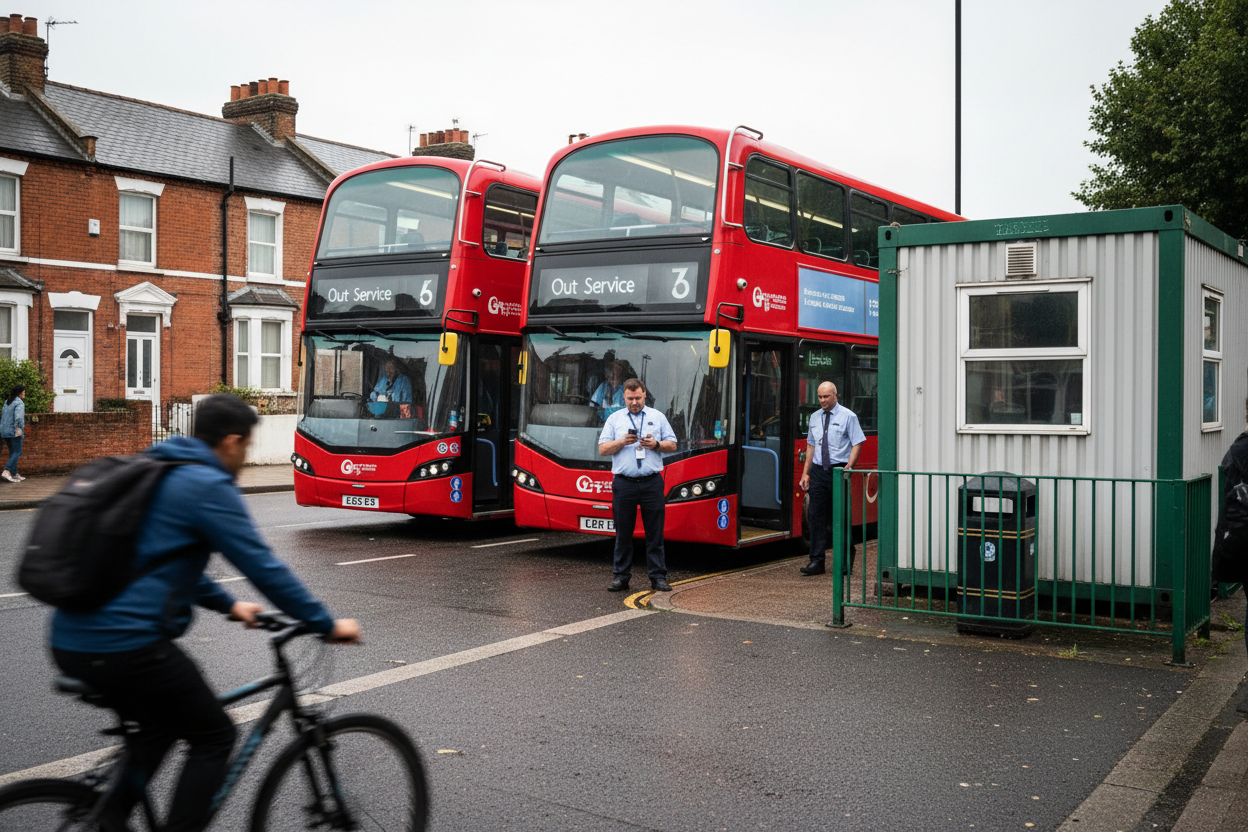
Transport for London has pledged to install toilets on all of its bus routes, following sustained campaigning by drivers — but the Mayor of London has stopped short of writing a set of basic rights into TfL's contracts with bus operators.
Sir Sadiq Khan has rejected calls to adopt in full a so-called 'bill of rights' for bus drivers, arguing that such a document could be "out of date very soon" and that City Hall needs to keep evolving its position to serve drivers best.
The London Assembly passed the bill of rights unanimously this summer, setting out twelve demands. City Hall has agreed to three of them. Among those still outstanding are the right to a safe work schedule without forced overtime or loss of pay, and the right to proper rest breaks.
That leaves a notable gap between what the Assembly asked for and what has been conceded — and it is the mechanism, rather than the substance, that Khan takes issue with. "We need to evolve and find new ways to help bus drivers rather than having things stuck in stone," he said, noting that ten years ago the extreme temperatures now recorded in bus cabs were not anticipated.
The trade-off he is describing is between flexibility and enforceability. A commitment held in contract is harder to walk away from; a commitment held as policy can be revised as conditions change. Drivers campaigning on the issue, and the testimonies gathered by the Local Democracy Reporting Service, have pushed for the former.
Keith Prince, the Assembly member who proposed the bill of rights, was unimpressed. "For a mayor who reminds Londoners he is the son of a bus driver, this dismissal is astonishing," he said.
On facilities, the numbers Khan set out are substantial. More than £24million has been invested in over 150 toilets across the past decade, he said, with a further £6million allocated for 53 more.
TfL has also committed to retrofitting air conditioning in every bus driver cab by May 2027, a deadline Khan has separately admitted will be difficult to meet.
The mayor suggested one further route to locking in minimum standards: a publicly owned bus company, which he said could set benchmarks for basic conditions. Feasibility studies on that are still under way, so what it would mean in practice — and when — remains open.