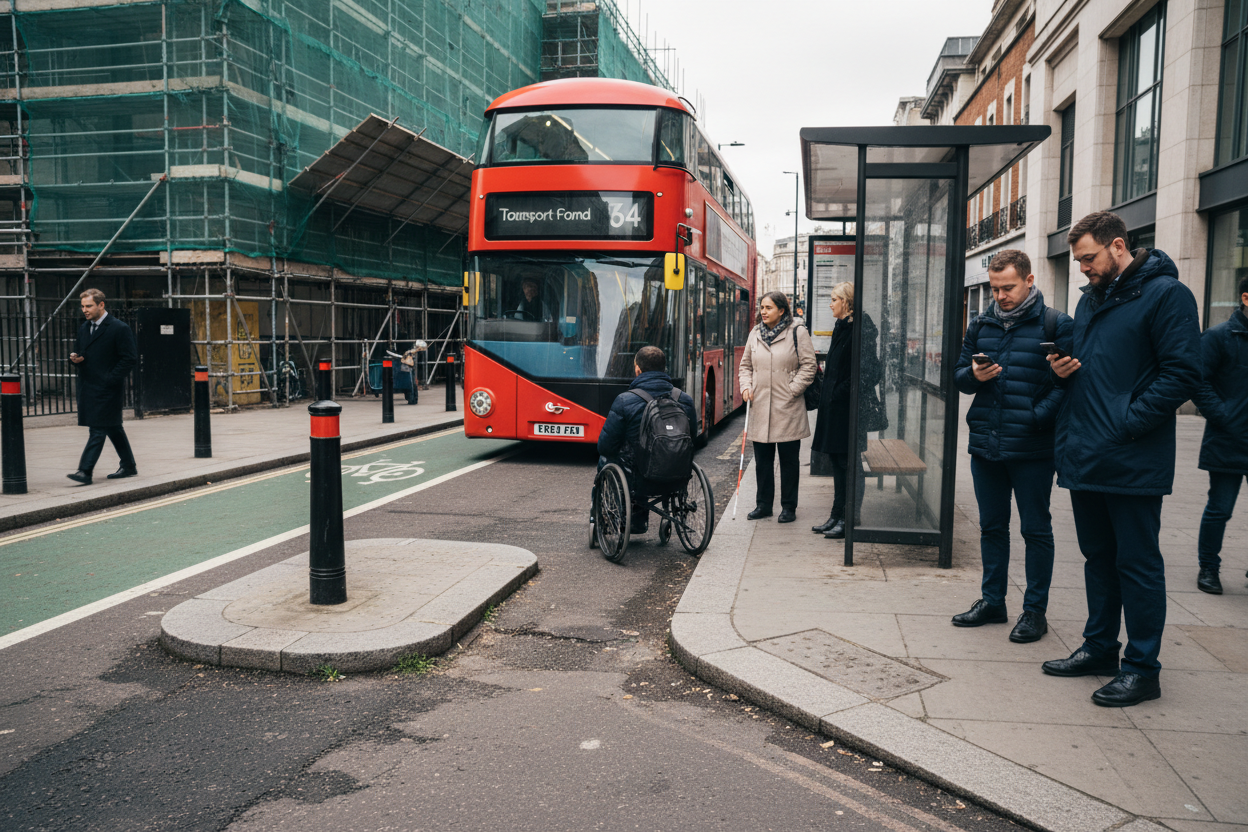
Sir Sadiq Khan's first action plan to improve life for deaf and disabled Londoners has been criticised for "papering over London's accessibility failures" rather than tackling the barriers behind them.
City Hall launched the plan on Monday 14th September, setting out commitments on transport, safety, housing, employment and financial support for the capital's 1.2 million deaf and disabled residents. Among them are pushing boroughs and developers to deliver more accessible housing, and making it easier for disabled Londoners to claim financial entitlements, report crimes and be evacuated safely in an emergency.
The plan had been due in March, then June, before arriving this month — and for some of those who had been waiting, it does not go far enough.
"Ultimately, the mayor's plan is completely lacking the scale of ambition, transformation and investment needed to even make a dent in the barriers disabled Londoners face," said Hina Bokhari, leader of the Liberal Democrats on the London Assembly.
"My biggest fear is that this plan risks papering over London's accessibility failures rather than confronting them. There are some worthwhile measures here, but the painful reality of the mayor's first-ever disability action plan is that the ambition to really tackle those systemic barriers and genuinely make a difference to disabled Londoners' lives is simply not there."
Inclusion London, which worked closely with the Greater London Authority as an independent strategic partner while the plan was being written, gave it a warmer welcome. Chief executive Tracey Lazard said: "We welcome it and see it as a strategically important positive step.
"While at this time not every action suggested by our community was included in this first action plan, the focus now must shift to ensuring the plan is implemented fully and the visions set out in key policy areas are used to guide policy-making in London for years to come."
The numbers behind the plan set out how far apart the two Londons are. Poverty levels are on average seven percentage points higher in households with at least one disabled family member — 31% — than in those without, at 24%. In 2024, 59% of disabled Londoners were in work, compared with 80% of non-disabled Londoners. Almost a third live in social housing, against 10% of non-disabled residents, and those who cannot find accessible social housing are often pushed into the private rented sector and the financial strain that comes with it.
Disabled Londoners told the plan's authors that communication barriers and inaccessible locations had stopped them claiming support they were entitled to. In response, the GLA will pilot improvements to "accessible advice provision", including making sure people know about concessions on Transport for London services.
On safety, the Metropolitan Police recorded 2,245 disability hate crime incidents between 2022 and 2026. The force has committed to working with the disability co-production group at the Mayor's Office for Policing and Crime to make reporting easier and victim support more appropriate. The GLA has also promised to work with London Fire Brigade on safe evacuation routes in all buildings.
One absence stood out. The plan makes no mention of 'floating bus stops', despite Tom Rahilly, the GLA's assistant director of communities and social policy, telling the London Assembly in July that "it came up as an issue" while the report was being produced. Campaigners have called for plans for future floating bus stops in London to be scrapped to prevent tragedies involving cyclists colliding with vulnerable people.
City Hall says it will strengthen its engagement with disabled Londoners so that "lived experience" sits at the heart of the work. The mayor has previously rejected calls for a dedicated disability champion, but a "lived experience co-chair" will be appointed to work alongside Debbie Bernard-Weekes, deputy mayor for communities and social justice. The GLA will monitor progress on every action point, give quarterly updates to its disability engagement forum and publish data online.
In his foreword, Khan wrote: "Our capital is home to 1.2million deaf and disabled people, who make an enormous contribution to our capital. But too many continue to face unacceptable inequalities and challenges that affect their daily lives and prevent them from fully participating in and benefitting from life in London.
"That's why we're launching our Action Plan for Disabled Londoners, to double down on our efforts and set out the bold actions we'll be taking to tear down these barriers and improve the lives of deaf and disabled people in our city. This action plan isn't just a statement of intent – it's a promise of practical action."
Khan had said in July that he would "certainly" attend the launch, but City Hall held no public event for the release and he was not able to be there. Ms Bernard-Weekes attended in his place.
"The mayor promised to be there to launch the plan himself, yet in the end he did not even show up – which is not surprising given it's hardly a plan to shout from the rooftops about," Ms Bokhari said.