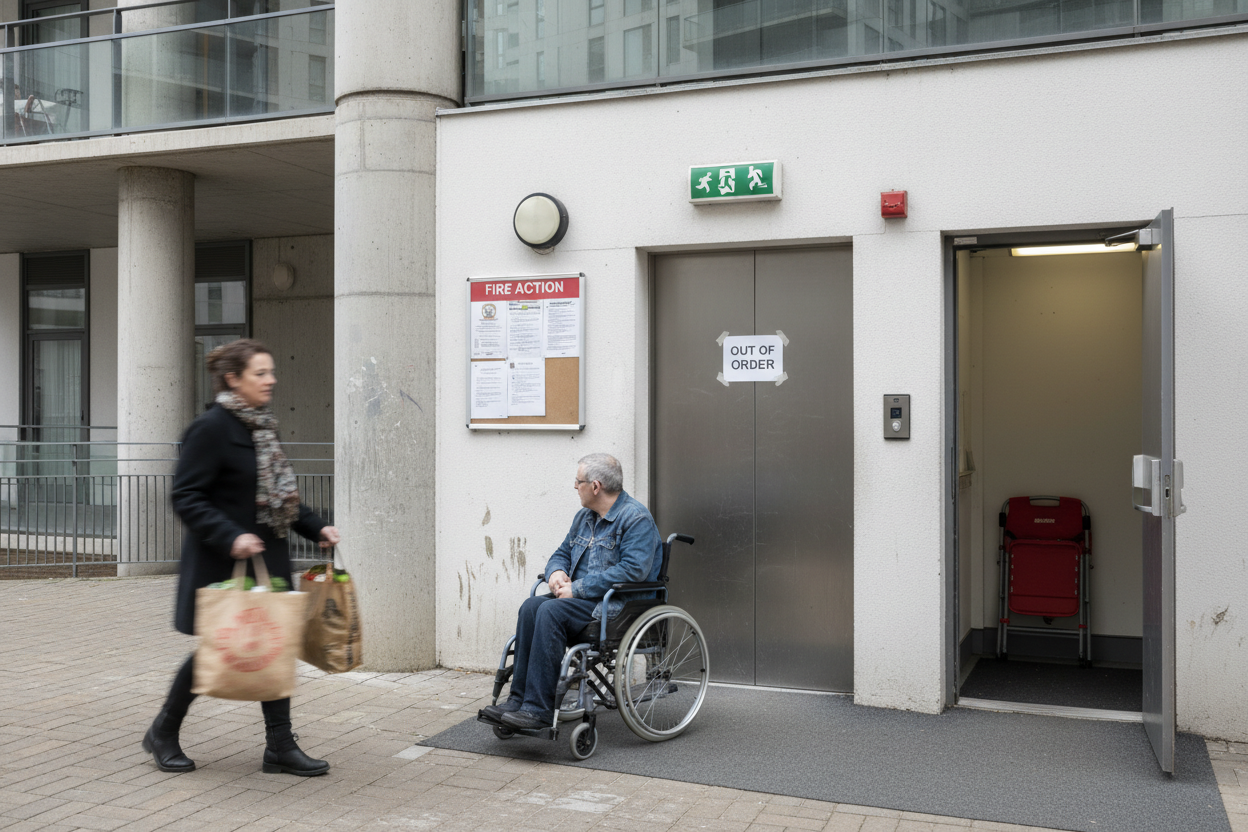
Disabled Londoners living in high-rise flats continue to face serious safety concerns despite new fire evacuation regulations, according to campaigners and London Assembly members.
Fifteen of the 37 disabled residents in Grenfell Tower during the 2017 fire — 41 percent — died in the tragedy. Following the inquiry's recommendations, new Residential Personal Emergency Evacuation Plans, known as RPEEPs, came into force in April 2026. They allow disabled residents in certain buildings to request tailored emergency escape support.
The regulations apply only to buildings over 18 metres or seven storeys, or to buildings between 11 and 18 metres that use simultaneous evacuation strategies. Residents of shorter buildings receive no such protections.
Adam Gabsi, co-chair of Inclusion London, told the London Assembly's Fire Committee: "Smoke does not discriminate based on height. If someone is disabled on the ground floor, the first floor, the second floor, they are still disabled."
Mr Gabsi, who lives on the sixth floor of Trident Point in Harrow, described multiple hazards in his building: broken lifts, damp, mould, and an evacuation chair locked behind a cupboard he cannot access. He said he was deeply concerned about whether he would survive a fire in the block, which is managed by Metropolitan Thames Valley Housing.
Assembly member Hina Bokhari responded: "If there is a fire here, if something terrible happened here, do we see another Grenfell? Yes."
The mayor's office said it continues to lobby for legislation that would expand RPEEP eligibility to all residential blocks, with central government funding.